




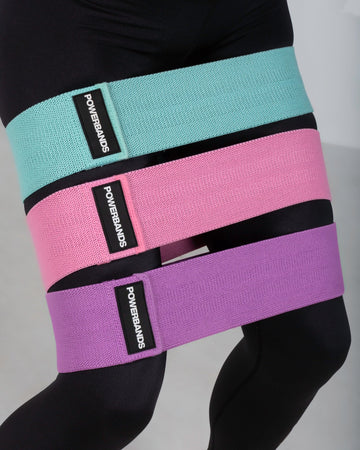
Most of us want to get stronger and fitter, and we use whatever equipment we can to reach our fitness goals. However, not all of us have the resources and space for a fully equipped home workout station. Also, going to the gym can be awkward, stressful, or even unsafe for some of us. Because of this, there’s an increasing need for an exercise tool that’s versatile, effective, portable, and not too expensive. Fortunately, resistance bands exist.
What Are Resistance Bands?
Resistance bands are a versatile workout tool. They may seem simple, but they cover a wide range of exercises. For such lightweight equipment, you can do intense, strength-building exercises. They’re highly portable as well, which suits people on the go. You can use them at home, at the park, at the gym, or even in the office—if they allow you to.
There are many types of resistance bands, from the thin and sleek micro bands to the broader yoga bands, and they all have their benefits. Different sizes provide a wide variety of uses, and they allow you to target both superficial and deep muscle groups that standard weightlifting exercises typically leave untouched.
Resistance bands are steadily gaining popularity all over the world because of their numerous benefits. However, along with their prevalence come numerous misconceptions about them. To help clear up false notions about these quality workout tools, we’ve explained the myths and facts about power bands. Let’s debunk some of them below:
Misconception #1: They Aren’t Effective for Strength Training
Resistance bands produce enough tension to provide you with deep, intense workout sessions. Similar to how weights resist your muscles’ pulling and pushing due to gravity, resistance bands also provide opposing elastic forces that help increase your muscle size and strength.
Introducing stress to your muscles is key to strengthening them, and resistance bands can provide you with this. With regular use, you can target multiple muscle groups and build strength over time.
Misconception #2: Serious Athletes Have No Use for Them
It’s a common misconception that resistance bands are just for those who just want to up their light exercise routines, but even competitive athletes regularly use them for training. They’re useful for building strength and endurance and supplementing their regular, intense regimens.
Misconception #3: They Cannot Handle Intense Workout Regimens
Resistance bands are lightweight and portable, leading many to believe that they will just break and snap due to intense pulls and stretches. However, they’re actually made from highly durable materials, especially when they’re from quality brands like POWERBANDS®. They can handle immense forces without the risk of being compromised.
Misconception #4: They Stretch Out and Lose Their Effectiveness
It’s normal for resistance bands to extend their resting length after a few initial uses. However, the pull force remains the same even after thousands of repetitions. This means that the bands don’t weaken and lose effectiveness with continuous use.
Misconception #5: They’re Only for Light Exercise
Resistance bands are often used for light, low-risk workouts. However, their capabilities reach beyond that. Their elasticity and resistance make them suitable for intense activities as well.
With resistance bands, you’ll feel a fulfilling burn that other equipment may not be able to give. They can challenge more muscle fibres and make workouts more efficient because they do not allow you to cheat with momentum like weights do.
Misconception #6: They Are Limited to a Few Routines
At first glance, resistance bands look too simple to be of any use, especially for professional athletes who are used to intense and diverse routines. It may be easy to brush them off as limited to a few simple exercises, but they’re infinitely more versatile than they appear.
You can perform many of your regular exercises with resistance bands, such as squats, shoulder presses, bicep curls, and many more. Moreover, unlike weights that only use gravity and operate on a vertical plane, these bands can also work on horizontal and diagonal planes, giving you a wide range of choices when it comes to workouts.
Misconception #7: They’re Hard to Control
Many people worry that resistance bands are difficult to control because they can travel up or down the ankles, legs, or arms during exercise routines. However, they typically do not do so as long as you maintain tension. Keep your arms and legs apart as you work out, and they should stay as they are.
It may take some time to get used to resistance bands, so it’s normal to use them slowly at first. However, after a while, you’ll be accustomed to the feeling. You’ll learn how to move quickly with these tools and activate those fast-twitch muscles.
Misconception #8: They’re Just Another Trend
Resistance bands may have risen in popularity recently, but the principle of using elastic resistance for workouts has been around for almost a century now. Athletes of any skill level can use them, and their versatility makes them timeless tools that can help many people achieve their fitness goals.
The Takeaway
Resistance bands are far more than what meets the eye. They may be affordable and relatively simple-looking, but they are versatile tools that can help people work out anytime and anywhere. They are effective and versatile, and athletes of all fitness levels can use them to achieve real improvements in muscle strength and endurance.
If you’re looking for resistance bands in Australia, POWERBANDS® has you covered. With a wide selection of quality bands, we’ll help you find the right bands for your training. Shop yours today!


